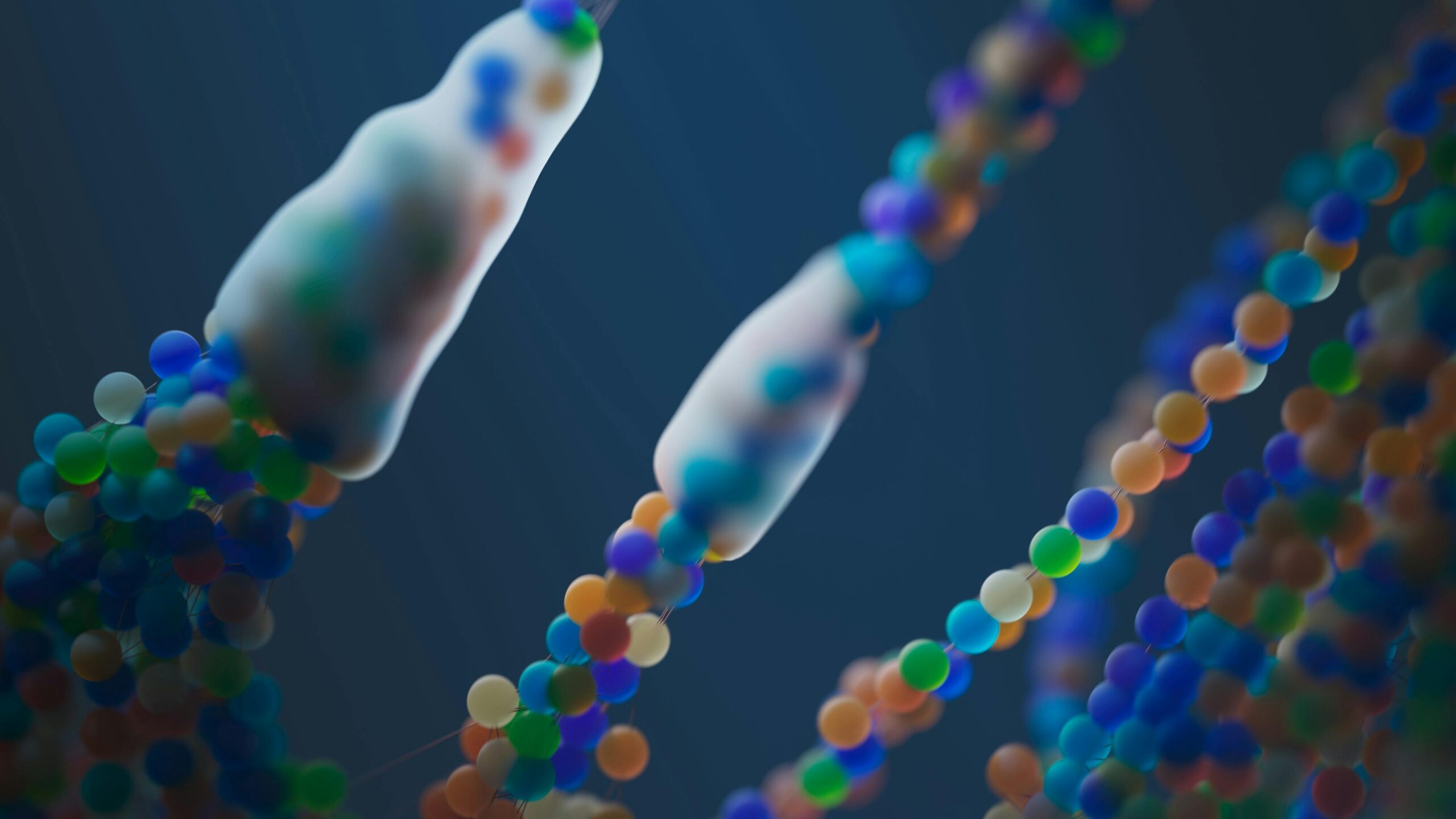
The ability to predict mutations before they occur represents one of the most groundbreaking frontiers in modern science, promising to transform healthcare and research fundamentally.

From understanding how viruses evolve to anticipating cancer development, predictive mutation forecasting stands at the intersection of artificial intelligence, genomics, and computational biology. This revolutionary approach doesn’t just react to genetic changes—it anticipates them, offering unprecedented opportunities for prevention, treatment, and scientific discovery. As we stand on the cusp of this new era, the implications extend far beyond laboratory walls, touching every aspect of human health and our understanding of life itself.
🧬 The Science Behind Predictive Mutation Forecasting
Predictive mutation forecasting employs sophisticated computational models to anticipate genetic changes before they manifest in biological systems. At its core, this technology analyzes patterns in DNA sequences, evolutionary pressures, and environmental factors to calculate the probability of specific mutations occurring.
The foundation rests on understanding that mutations aren’t entirely random. They follow patterns influenced by molecular structure, replication mechanisms, and selective pressures. Machine learning algorithms trained on vast genomic databases can identify these patterns with increasing accuracy, transforming what once seemed unpredictable into calculable probabilities.
These predictive models incorporate multiple data streams: historical mutation rates, protein structure constraints, population genetics, and even environmental stressors. By integrating these diverse information sources, researchers create comprehensive forecasts that guide both preventive strategies and therapeutic interventions.
The Role of Artificial Intelligence in Mutation Analysis
Artificial intelligence has become the engine driving predictive mutation forecasting forward. Deep learning networks process millions of genetic sequences simultaneously, identifying subtle correlations that human researchers might overlook. These neural networks learn from every new genome sequenced, continuously refining their predictive capabilities.
Natural language processing techniques, originally developed for text analysis, have been adapted to “read” genetic code. These algorithms treat DNA sequences as a language with grammar, syntax, and meaning, enabling them to predict likely “sentences” that evolution might write next.
💊 Revolutionizing Cancer Treatment Through Mutation Prediction
Cancer represents perhaps the most compelling application of predictive mutation forecasting. Tumors evolve through successive mutations, developing resistance to treatments and finding new pathways for growth. By forecasting these evolutionary trajectories, oncologists can stay one step ahead of the disease.
Precision oncology now incorporates predictive models that anticipate which resistance mutations a patient’s tumor is most likely to develop. This foresight enables sequential treatment planning, where physicians prepare second and third-line therapies before resistance emerges, rather than reacting after treatment failure.
Clinical trials are already demonstrating the power of this approach. Patients receiving mutation-forecasting-informed treatment sequences show improved outcomes compared to traditional reactive protocols. The ability to predict resistance patterns transforms cancer from a constantly surprising adversary into a more manageable chronic condition.
Personalized Prevention Strategies
Beyond treatment, mutation forecasting enables truly personalized cancer prevention. By analyzing an individual’s genome alongside family history and environmental exposures, predictive models identify which cancer-associated mutations that person is most susceptible to developing.
This information empowers targeted screening protocols, lifestyle modifications, and even preventive interventions tailored to each person’s unique risk profile. Rather than applying broad population-level recommendations, healthcare providers can focus resources where they’ll have maximum impact for each individual.
🦠 Staying Ahead of Infectious Disease Evolution
The COVID-19 pandemic starkly illustrated how viral evolution can outpace human response systems. Predictive mutation forecasting offers a solution to this perpetual arms race, enabling scientists to anticipate variant emergence before it occurs.
Researchers now use evolutionary models to predict which mutations are most likely to arise in circulating viral strains. These forecasts guide vaccine development, helping designers create immunogens that provide protection not just against current variants but also against predicted future forms.
This proactive approach extends to influenza, HIV, and other rapidly evolving pathogens. By forecasting mutation pathways, scientists can develop therapeutic strategies with built-in resilience against viral adaptation, creating treatments that remain effective even as pathogens evolve.
Global Surveillance Networks Enhanced by Prediction
Predictive mutation forecasting amplifies the effectiveness of genomic surveillance networks. Rather than simply tracking what mutations have occurred, these systems now flag emerging genetic changes that match predicted high-risk profiles, enabling earlier intervention.
International collaborations share both genomic data and predictive models, creating a global early warning system for infectious disease threats. This coordinated approach provides crucial lead time for public health responses, potentially preventing pandemics before they gain momentum.
🔬 Accelerating Drug Discovery and Development
Pharmaceutical development traditionally involves extensive trial-and-error testing of compound effectiveness. Predictive mutation forecasting streamlines this process by anticipating how target proteins might mutate in response to drug pressure.
Drug designers now incorporate predicted resistance mutations into their development process from the beginning. They create molecules that maintain effectiveness even against forecasted variants of their target proteins, building resilience into therapeutics before they reach patients.
This approach reduces both development timelines and costs. Rather than discovering resistance mechanisms through expensive clinical trial failures, researchers address potential problems during early design phases, increasing the likelihood of creating durable, effective medications.
Optimizing Clinical Trial Design
Mutation forecasting also transforms clinical trial methodology. By predicting which patient subgroups are likely to develop treatment-resistant mutations, researchers can stratify trial populations more effectively, ensuring adequate representation of challenging cases.
This predictive stratification improves trial efficiency and generates more comprehensive safety and efficacy data. Regulatory agencies increasingly recognize the value of mutation-forecasting-informed trial designs, facilitating faster approval pathways for drugs developed using these approaches.
🧠 Neurological Disorders and Genetic Prediction
Neurodegenerative diseases like Alzheimer’s and Parkinson’s often involve complex interactions between multiple genetic factors. Predictive mutation forecasting helps untangle these complexities, identifying which genetic changes increase disease risk and how they interact with environmental factors.
For hereditary neurological conditions, mutation prediction provides families with crucial information for family planning and early intervention strategies. Knowing the likelihood of specific mutations arising enables genetic counselors to offer more precise guidance and support.
Research into these conditions benefits enormously from predictive models that highlight which genetic pathways are most likely to contribute to disease progression. This focus accelerates therapeutic target identification and treatment development.
🌱 Agricultural Applications and Food Security
Beyond human health, predictive mutation forecasting strengthens food security by anticipating how crop pathogens and pests will evolve. Agricultural researchers use these forecasts to develop resistant crop varieties before new pathogen strains emerge.
This proactive approach to agricultural biotechnology reduces crop losses and decreases pesticide dependence. By staying ahead of pest evolution, farmers maintain productivity while minimizing environmental impact.
Livestock health also benefits from mutation prediction, as veterinary researchers anticipate animal disease evolution and develop appropriate vaccines and treatments before outbreaks occur.
⚖️ Ethical Considerations and Responsible Implementation
The power of predictive mutation forecasting raises important ethical questions that society must address thoughtfully. The ability to predict future genetic changes in individuals creates privacy concerns and potential discrimination risks.
Genetic information about predicted mutations could theoretically be misused by insurers, employers, or other entities, necessitating robust legal protections. Many jurisdictions are developing or strengthening genetic non-discrimination laws to address these concerns.
There’s also the question of psychological impact. Learning about one’s predisposition to develop certain mutations carries emotional weight. Healthcare systems must develop appropriate counseling and support structures to help individuals process and act upon predictive genetic information responsibly.
Balancing Innovation with Privacy Protection
Developing effective predictive models requires access to large genomic databases, creating tension between scientific progress and individual privacy. Researchers and policymakers are working to establish frameworks that enable beneficial research while safeguarding personal information.
Federated learning approaches, where models train on decentralized data without directly accessing individual records, offer promising solutions. These techniques allow collaborative improvement of predictive algorithms while maintaining data privacy.
📊 The Technology Infrastructure Supporting Prediction
Predictive mutation forecasting depends on massive computational infrastructure. Cloud computing platforms provide the processing power necessary to analyze billions of genetic sequences and run complex evolutionary simulations.
Data storage requirements are equally substantial. A single human genome generates approximately 200 gigabytes of raw data, and effective predictive models train on millions of genomes. Advanced compression algorithms and efficient database architectures make managing this information feasible.
Collaboration platforms enable researchers worldwide to contribute to and benefit from shared predictive models. Open-source initiatives democratize access to these powerful tools, ensuring that institutions regardless of size can participate in and benefit from mutation forecasting advances.
🚀 Future Horizons: What’s Coming Next
The field of predictive mutation forecasting continues advancing rapidly. Quantum computing promises to dramatically accelerate complex evolutionary simulations, enabling more accurate long-range predictions.
Integration with other emerging technologies creates synergistic possibilities. Combining mutation forecasting with CRISPR gene editing could enable preemptive correction of predicted deleterious mutations before they cause disease symptoms.
Real-time mutation forecasting represents another frontier. Rather than periodic predictions, continuous monitoring systems could provide dynamic forecasts that update as new data arrives, offering unprecedented temporal resolution for tracking evolutionary processes.
Expanding to Non-Human Systems
While human health applications dominate current attention, predictive mutation forecasting has enormous potential for understanding and managing ecosystems. Predicting how species adapt to climate change could inform conservation strategies and help preserve biodiversity.
Microbial ecology research benefits from understanding how bacterial communities evolve in response to environmental changes. These insights support everything from bioremediation efforts to maintaining healthy human microbiomes.
💡 Practical Steps Toward Implementation
Healthcare systems worldwide are beginning to integrate predictive mutation forecasting into clinical workflows. Early adopters are developing protocols for incorporating predictive information into treatment planning and patient counseling.
Educational initiatives are preparing the next generation of healthcare providers to work with predictive genomic tools. Medical and nursing curricula increasingly include training on interpreting and communicating probabilistic genetic information.
Patient advocacy groups play crucial roles in ensuring these technologies are implemented in ways that truly serve patient interests. Their input helps shape policies, clinical guidelines, and research priorities.
🌐 Global Collaboration and Knowledge Sharing
Maximizing the potential of predictive mutation forecasting requires international cooperation. Genetic diversity varies across populations, and comprehensive predictive models must incorporate data from all human communities.
Several international consortia now coordinate genomic data sharing and predictive model development. These collaborations ensure that benefits reach all populations equitably, not just those in wealthy nations with extensive research infrastructure.
Capacity building in developing regions represents both an ethical imperative and a scientific necessity. Including diverse populations in research improves model accuracy for everyone while distributing benefits more fairly.
🎯 Transforming Healthcare Economics
The economic implications of predictive mutation forecasting are profound. Prevention is consistently less expensive than treatment, and mutation prediction enables more effective preventive strategies.
By reducing disease incidence and improving treatment outcomes, these technologies promise to bend the healthcare cost curve. Early analyses suggest substantial return on investment for healthcare systems that implement mutation forecasting programs.
Pharmaceutical economics also shift as drugs become more durable and development becomes more efficient. While upfront research costs may increase, overall development expenses and failure rates should decline, potentially reducing drug prices.

🔮 A Vision of Medicine Transformed
Predictive mutation forecasting represents more than incremental improvement—it embodies a fundamental paradigm shift in how we approach health and disease. Medicine moves from reactive to proactive, from generalized to personalized, from uncertain to informed.
The coming decades will see these technologies mature from promising research tools into standard clinical practice. Patients will receive care plans designed not just for who they are genetically today, but for who they might become tomorrow.
This transformation extends beyond individual healthcare to reshape public health strategies, pharmaceutical development, and our basic understanding of biological systems. As predictive power improves, the boundaries between treatment and prevention blur, creating a healthcare paradigm focused on maintaining health rather than merely fighting disease.
The journey toward fully realizing this potential has just begun. Challenges remain—technical, ethical, and logistical—but the trajectory is clear. Predictive mutation forecasting will fundamentally alter our relationship with disease, offering hope for healthier lives and more effective medicine. By embracing these technologies thoughtfully and equitably, we can truly unlock a future where genetic foresight becomes humanity’s most powerful tool for health and longevity.